Marketing automation has made it much easier to run campaigns at scale, but there is still a lot of work behind every campaign. Before anything goes live, a marketing team needs the right customer data, a useful audience, suitable content, campaign logic and a clear way to measure what happens next.
When a business runs several campaigns across different products, regions or channels, that preparation can become a large part of the workload. Marketing Cloud Next is Salesforce’s latest approach to reducing some of that work by bringing marketing capabilities together with Agentforce, Data 360 and Salesforce Flow on the Salesforce Platform.
Salesforce describes this as agentic marketing. In practice, it means moving some of the work between the initial campaign idea and the final execution away from manual setup.
What Changes With Marketing Cloud Next
Imagine a company wants to promote a new service to existing customers who have previously shown interest in a related product. The marketing team first needs to identify the right customers and check whether they can be contacted, then prepare the audience, create content, set up the journey and decide what should happen when people engage with the campaign.
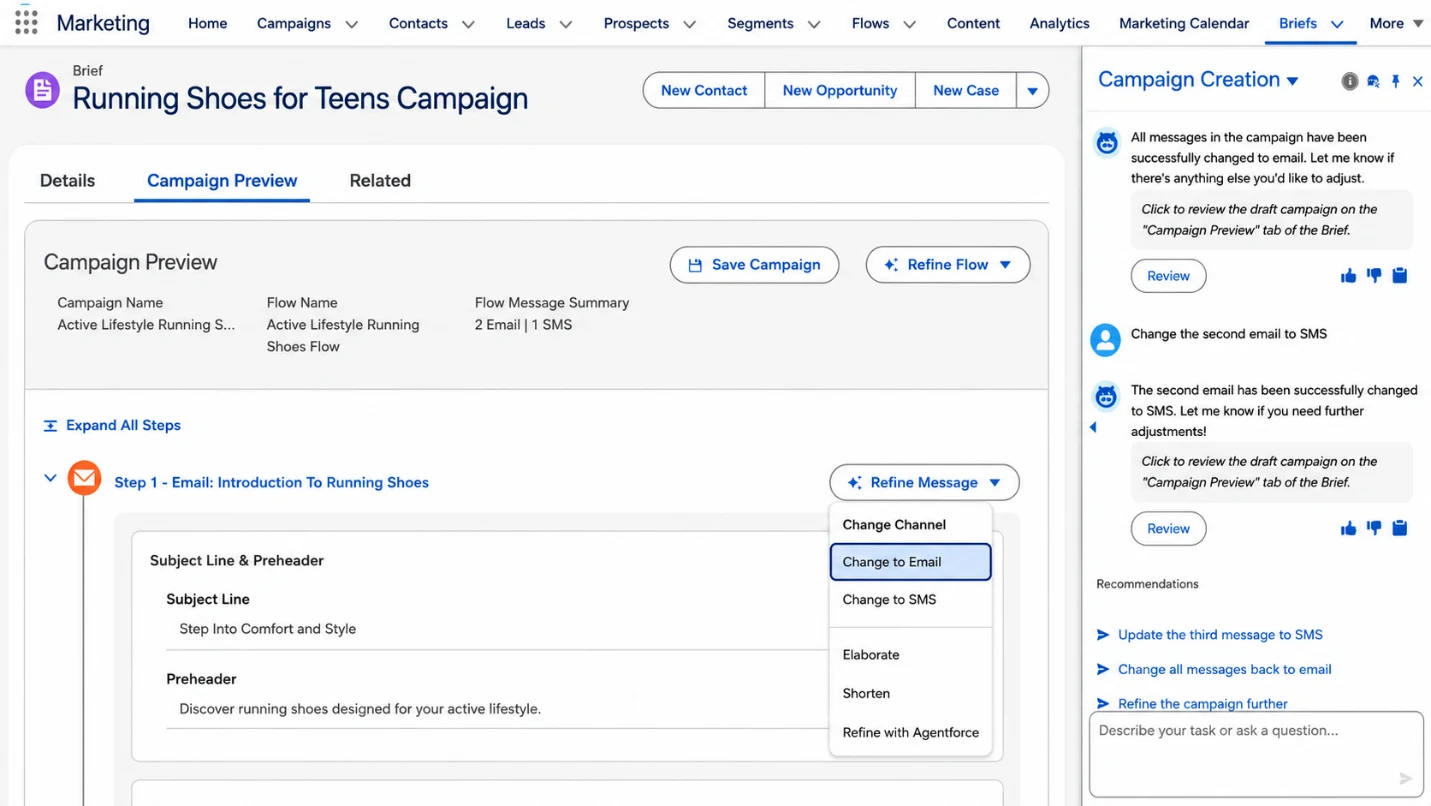
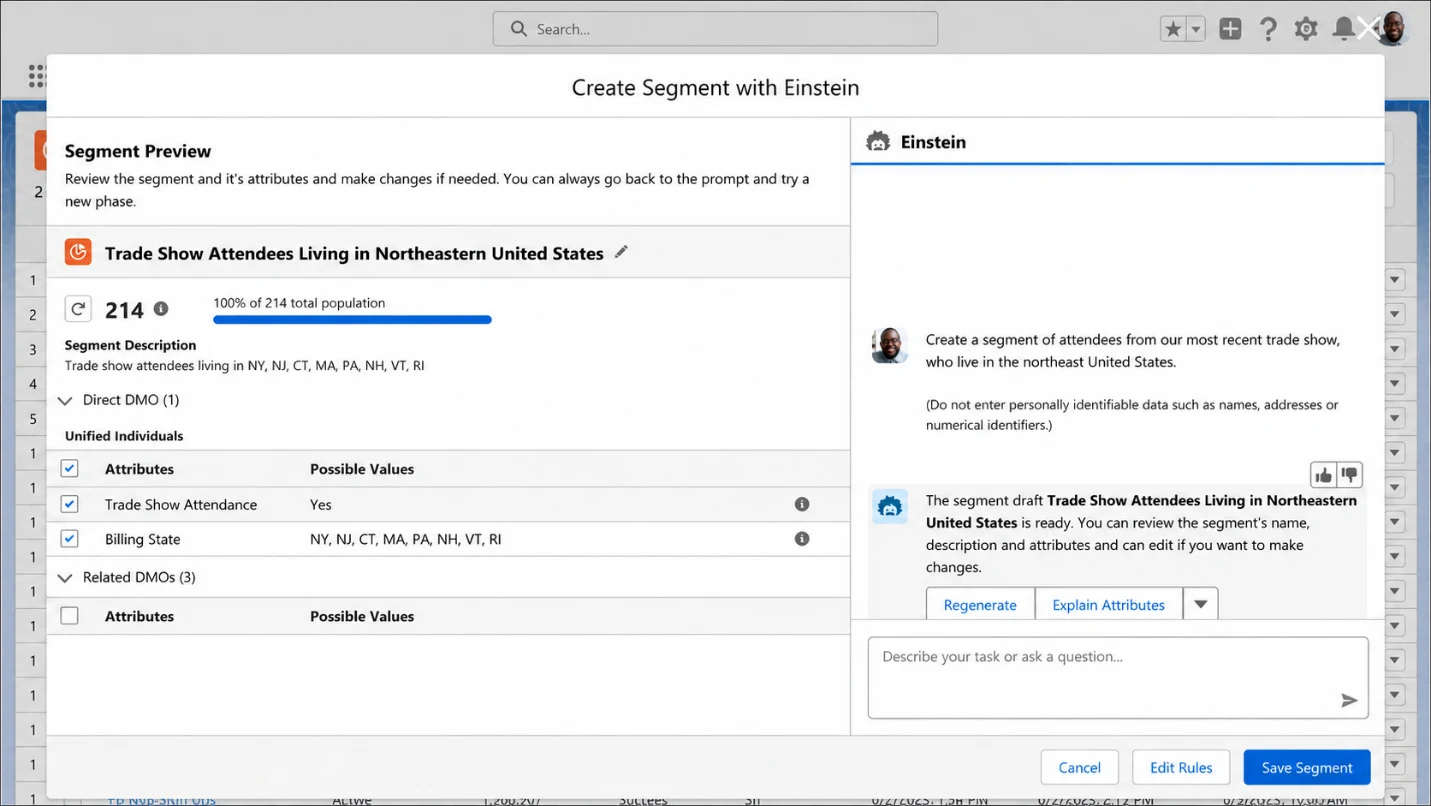
Marketing Cloud Next allows more of that process to start from the campaign objective itself. Salesforce demonstrates marketers describing what they want to achieve in natural language, with Agentforce helping to turn that brief into an audience, campaign content and a customer journey.
This goes further than using generative AI to write an email because Agentforce can work alongside customer data, segmentation and Salesforce automation. The marketing team still controls the objective, messaging and rules around the campaign, but less manual preparation may be required before the campaign is ready to launch.
For teams running campaigns frequently, that can make a practical difference. Saving time on audience creation, content preparation or journey setup becomes more valuable when the same work is repeated every week.
Better Campaigns Still Depend On Better Data
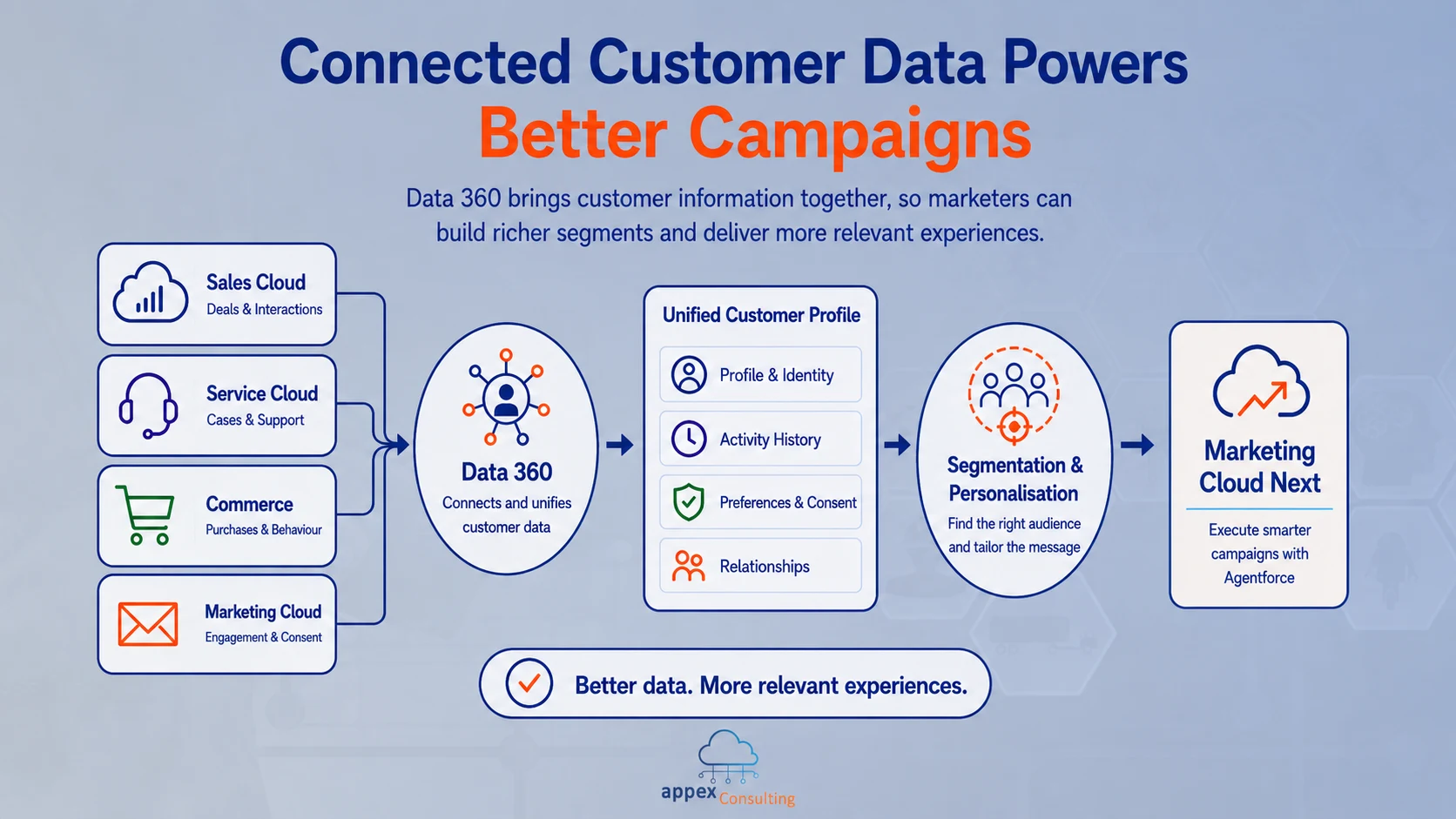
The quality of the customer data behind Marketing Cloud Next makes a big difference. Most businesses do not have all their customer information in one place: sales activity may be in Salesforce, ecommerce behaviour in another platform, service history somewhere else and marketing engagement in a separate system.
That becomes a problem when those systems describe the same customer differently. Data 360 helps bring this information together so marketing teams can build audiences and personalise campaigns using a broader customer profile.
Consider a customer who has recently opened a support case, already owns several products and is currently speaking with the sales team about an upgrade. Those details can change how the business should market to them, and a generic acquisition campaign probably would not make much sense.
The customer may need to be excluded from one journey, included in another or receive different messaging based on the relationship they already have with the company. The same context becomes important when Agentforce is helping with segmentation or campaign decisions, since incomplete customer records, duplicate identities or outdated consent information will affect the result.
This is one reason Data 360 and Marketing Cloud Next are closely connected. More automation creates more value when the customer data underneath it can be trusted.
From Campaign Messages To Conversations
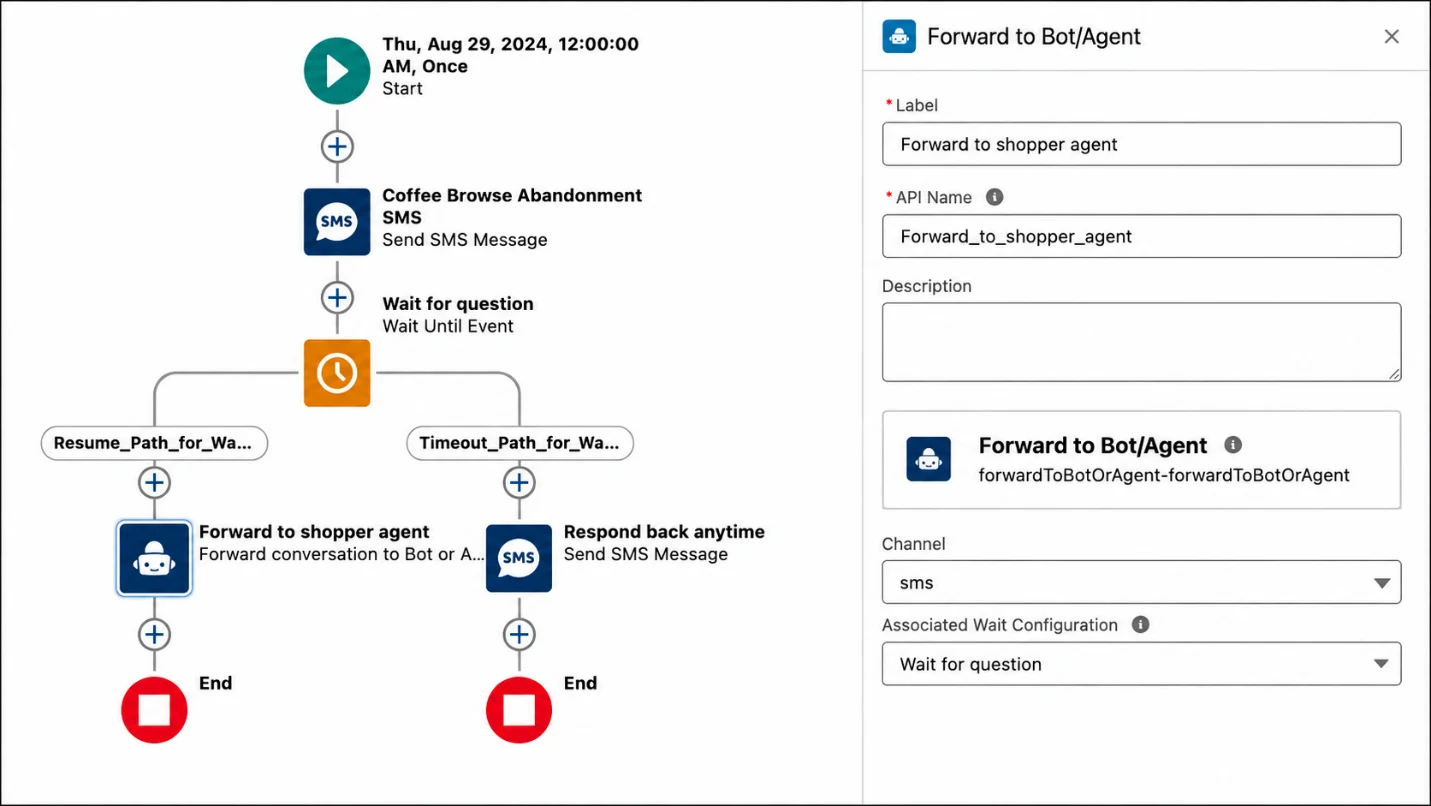
Marketing Cloud Next also expands the role of conversational interactions. Most marketing journeys are still designed around one-way messages, where a customer receives an email or SMS and then either clicks, ignores it or moves to another channel if they need more information.
With conversational journeys, the interaction can continue. A customer responding to a marketing message could be looking for more information about a product, showing buying intent or raising an issue that belongs with customer service.
Agentforce can use the available Salesforce context to help handle that interaction and connect it with another process where necessary. This creates a closer relationship between marketing and the rest of the CRM, because someone responding positively to a campaign may become relevant to sales, while a customer with an unresolved support problem may need a different journey entirely.
Because the data and processes sit on the Salesforce Platform, those interactions have more opportunity to share the same context. For businesses already trying to connect marketing, sales and service more closely, this may be one of the more useful parts of Marketing Cloud Next.
A Practical Example
A subscription business trying to reduce churn gives us a simple example of how the different parts can work together. The marketing team wants to contact customers whose engagement appears to be dropping, but email activity alone is not enough to identify those customers accurately.
Someone who has stopped opening marketing emails may still be actively speaking with an account manager, using the product regularly or dealing with an open support case. Data 360 can provide more of that customer context before the audience is created.
The team can then give Agentforce the campaign objective and use it to assist with segmentation, campaign preparation and content. Different customer groups can receive different messages rather than everyone entering the same journey.
Salesforce Flow can control what happens after that. One customer may receive another marketing touchpoint, while stronger buying signals could lead to a sales action, and customers with unresolved service issues could follow a separate path.
The marketing team still reviews the campaign and measures the results, but less of the work has to be assembled manually from the beginning. Segmentation, personalisation and marketing automation are not new concepts; what is changing is how Salesforce connects them with CRM data and agents that can assist with more of the work around them.
What This Means For Existing Marketing Cloud Customers
Companies already using Marketing Cloud Engagement or Account Engagement do not have to approach Marketing Cloud Next as a complete replacement project. Salesforce says the new capabilities can work alongside existing journeys, content, workflows and customer data.
That gives current customers room to introduce Marketing Cloud Next where it provides a clear benefit rather than rebuilding an established marketing environment immediately. A company with years of existing journeys, templates, integrations and reporting may start with one area where the current process is still heavily manual.
Audience creation is one possibility, while other organisations may focus on campaign preparation, conversational marketing or using CRM activity to make journeys more relevant. A phased approach also makes it easier to measure whether the new capabilities are actually improving the marketing process before expanding their use.
Preparing For Marketing Cloud Next
The technology is only one part of a successful Marketing Cloud Next project. A business exploring it should first have a clear picture of where its customer data comes from and whether that data is reliable enough for segmentation.
Consent also needs to be consistent across the channels the marketing team wants to use. If customer identities, preferences or communication permissions are unclear, those issues should be addressed before giving agents a larger role in campaign decisions.
Existing campaigns are another useful place to look. Mature Marketing Cloud environments often contain journeys that have been running successfully for years alongside others that require regular manual intervention, and the second group is usually more interesting when looking for a first Marketing Cloud Next use case.
The scope should also be measurable. A re-engagement journey, renewal campaign or customer onboarding process gives the team something concrete to compare before and after the change and makes it easier to understand whether the new setup is improving campaign delivery.
A New Marketing Cloud Next Certification
Salesforce is also introducing a certification specifically for the new platform. The Salesforce Certified Marketing Cloud Next Consultant certification is aimed at professionals working with Marketing Cloud Next in consulting and implementation roles, which launched on August 21, 2026.
The certification covers a broader range of topics than campaign creation alone. Its preparation material includes platform setup and governance, consent management, Data 360, identity resolution, segmentation, campaign design, Salesforce Flow, Agentforce, content and analytics.
That mix reflects the way Marketing Cloud implementations are changing. A consultant working with Marketing Cloud Next needs to understand how marketing connects with customer data and Salesforce automation, as well as the controls around consent, permissions and AI.
For Salesforce professionals already working across Marketing Cloud, Data 360 or Agentforce, the certification also provides a structured route into the new platform and the implementation skills around it.
How Appex Can Help
At Appex, we help businesses plan and implement Marketing Cloud solutions around their actual marketing needs. For companies introducing a marketing automation platform for the first time, or moving from another system, this can include defining the right data structure, customer journeys, channels, integrations, consent model and automation approach before building the new setup.
Other businesses may already be using Salesforce or Marketing Cloud and want to expand what they have. In those cases, the starting point is usually a review of the existing environment to understand where current journeys, customer data and processes can be improved and where Data 360, Flow or Agentforce could add value.
In both situations, the first phase can stay focused. A new implementation might start with the core audiences, campaigns and automations the marketing team needs day to day, while an existing environment might focus on better segmentation, more connected journeys or reducing manual campaign work.
Our work across Salesforce implementation, org optimization, automation, Data 360 and Agentforce can support both new Marketing Cloud projects and the evolution of existing environments, with ongoing support as new use cases and requirements are introduced.